Healing — The Return to Inner Harmony
A deep exploration of healing in The Law of One: consciousness, inner balance, emotions, and reconnection with the deeper nature of the self.
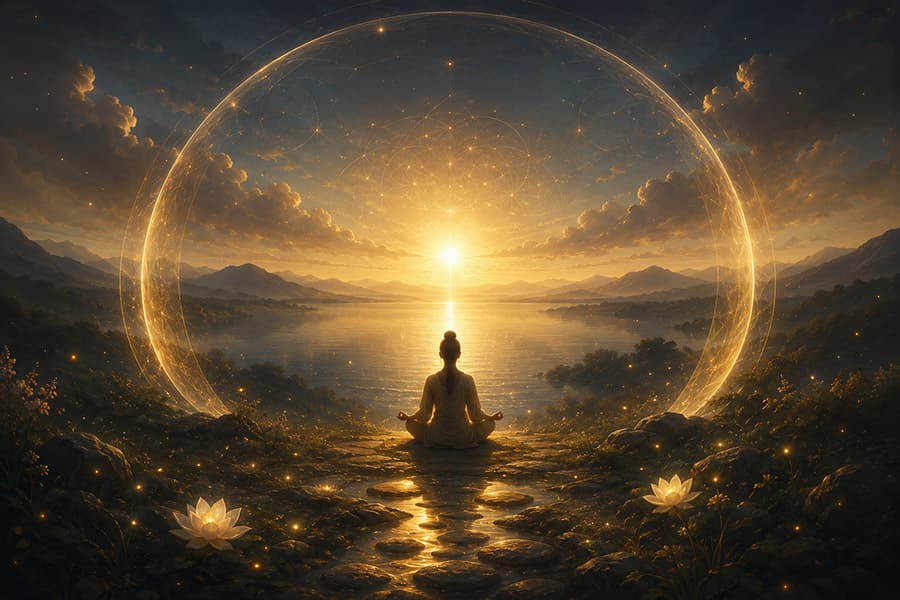
In most modern perspectives, healing is viewed almost exclusively as a physical process. The body is considered the central mechanism of suffering, while treatment aims at eliminating symptoms or restoring biological functions. In the perspective of The Law of One, however, the human being is not reduced to the body, but is understood as a complex expression of consciousness, in which mind, emotions, energy, and spirit form a single living field of experience.
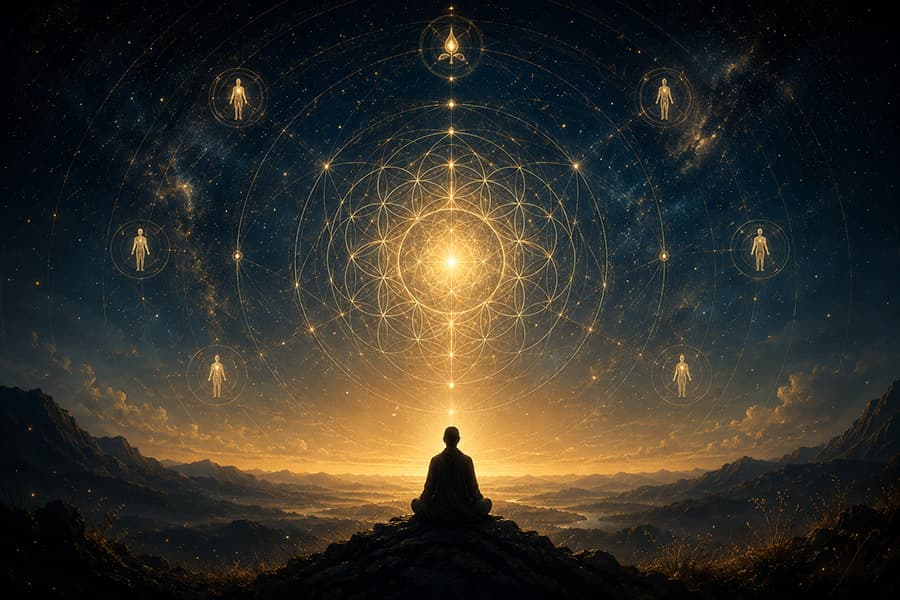
From this perspective, true healing does not begin only through intervention upon the body, but through the restoration of inner harmony. External imbalance often reflects subtler tensions: unintegrated fears, emotional conflicts, inner separation, resentment, guilt, or the loss of connection with one’s deeper nature. The body thus becomes not an enemy, but a language through which consciousness attempts to communicate.
“Authentic healing appears when the being begins to remember its own inner unity.
Illness as an Imbalance of Consciousness
In the Ra material, illness is not described as a divine punishment nor as an arbitrary error of existence. It is viewed rather as an expression of imbalance between the different levels of the being. Sometimes the body reflects persistent emotional tensions. At other times, it expresses profound conflicts between the authentic direction of the soul and the way the person lives in reality.
This perspective does not mean that every form of suffering is the individual’s «fault». The Law of One insists upon compassion and upon the fact that human experience is extremely complex. Some difficulties may represent lessons chosen before incarnation, catalysts for transformation, or experiences through which consciousness explores more deeply love, patience, acceptance, and forgiveness.
Healing and Self-Acceptance
One of the central ideas of the Law of One is that many inner distortions persist because the human being exists in conflict with the self. The desire for absolute control, shame, self-rejection, or the denial of emotions create subtle tensions that fragment inner harmony.
In this sense, healing often begins not through struggle, but through lucid acceptance. Acceptance does not mean passivity or surrender, but the capacity to sincerely look at what already exists within without hatred toward the self. Consciousness begins to harmonize when it ceases fragmenting its own aspects.
“What is rejected within continues asking for attention. What is observed with sincerity begins to transform.
Emotional Energy and the Body
The Law of One places major importance upon emotional energy. Emotions are not considered simple chemical reactions without depth, but real forms of energetic movement within consciousness. Fear, resentment, shame, or accumulated anger may create blockages that gradually reflect themselves within the physical body.
At the same time, authentic love, gratitude, compassion, and inner sincerity have a profoundly harmonizing effect upon the entire system of the being. This is not about artificial positive thinking, but about the real transformation of the relationship between the human being and personal experience.
The Role of Consciousness in the Healing Process
Ra suggests that true healing appears when the individual allows the intelligent energy of creation to circulate more freely through the being. In this perspective, the healer does not directly «produce» healing, but creates the conditions through which the person may reactivate their own inner harmony.
This radically changes the way the relationship between therapist and patient is viewed. Power does not belong exclusively to an external authority. Healing becomes an act of cooperation between consciousness, intention, openness, and the inner willingness for transformation.
Spiritual Healing and Forgiveness
In many spiritual traditions, including the teachings of Jesus, healing is closely connected with forgiveness. Not only forgiveness of others, but also forgiveness of the self. The emotional burden of guilt and resentment may keep consciousness within a continuous state of separation and tension.
Forgiveness does not erase the experience, nor does it justify the suffering caused. It nevertheless represents the choice to no longer energetically feed inner conflict. In many cases, true healing begins precisely at the moment when the human being ceases to define themselves exclusively through the wound.
“Healing does not mean returning to what we once were, but approaching what we truly are.
The Unity Between Beings
The Law of One goes even further and suggests that individual healing subtly influences the collective field of humanity as well. Every person who transforms fear into understanding, resentment into compassion, or separation into love contributes to the harmonization of the entire collective field of consciousness.
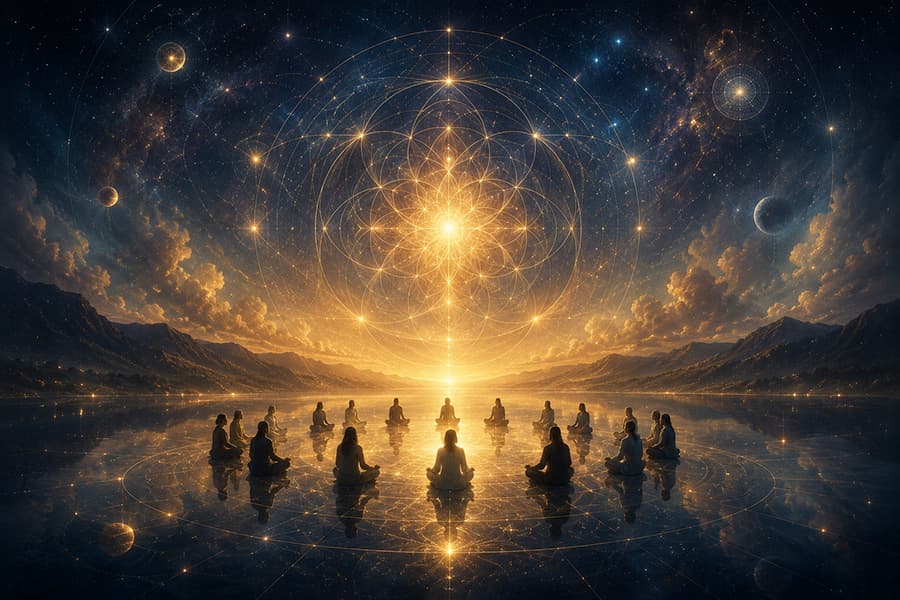
Thus, healing is no longer merely a personal process. It becomes an act of participation in the balance of all creation. To the extent that the human being heals their own inner fragmentations, they begin to perceive more clearly the profound unity between themselves and others-selves.
Summary
Within the perspective of the Law of One, healing represents the process through which the being restores harmony between body, mind, and spirit. Illness is not viewed as punishment, but as a possible signal of inner imbalance and separation from one’s deeper nature. Through acceptance, sincerity, forgiveness, and reconnection with love, consciousness begins once again to allow the harmonious flow of the energy of life. Healing thus becomes not only the repair of the body, but a gradual remembrance of inner unity and of the connection with all creation.